


Enhance your revision strategy
By incorporating these evidence-based techniques used at The Cottesloe School. Moving from passive review to active engagement will help promote a deeper, long-term understanding of your subjects.
1. Spaced Practice
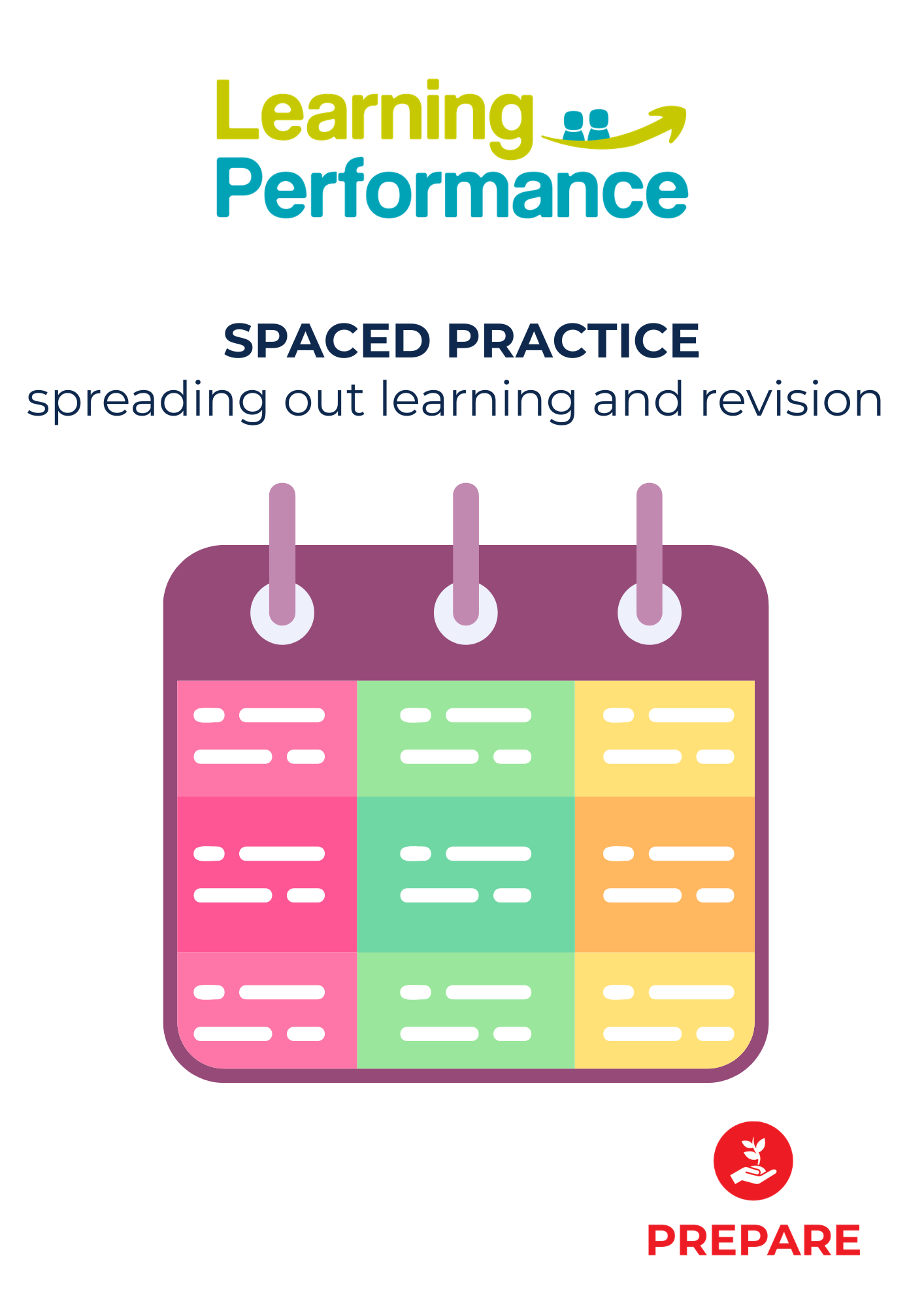
Instead of "cramming" all your revision into one intense session, spread your learning and revision out over time. This helps solidify information in your long-term memory.
2. The Pomodoro Technique
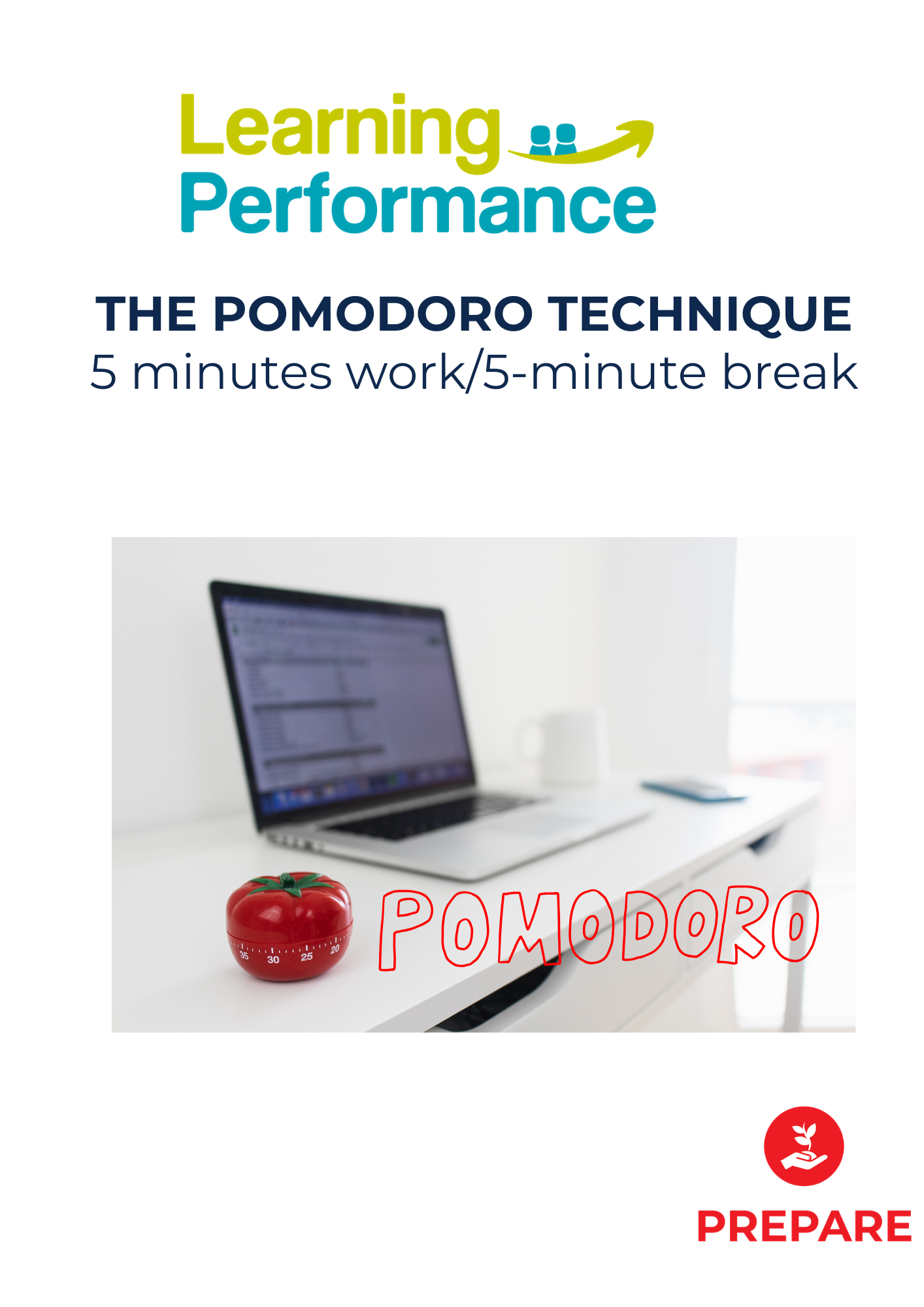
Maintain high levels of focus by working at timed intervals. A common approach is to complete 25 minutes of work followed by a 5-minute break.
3. Interleaving (The "Mix-and-Match" Method)
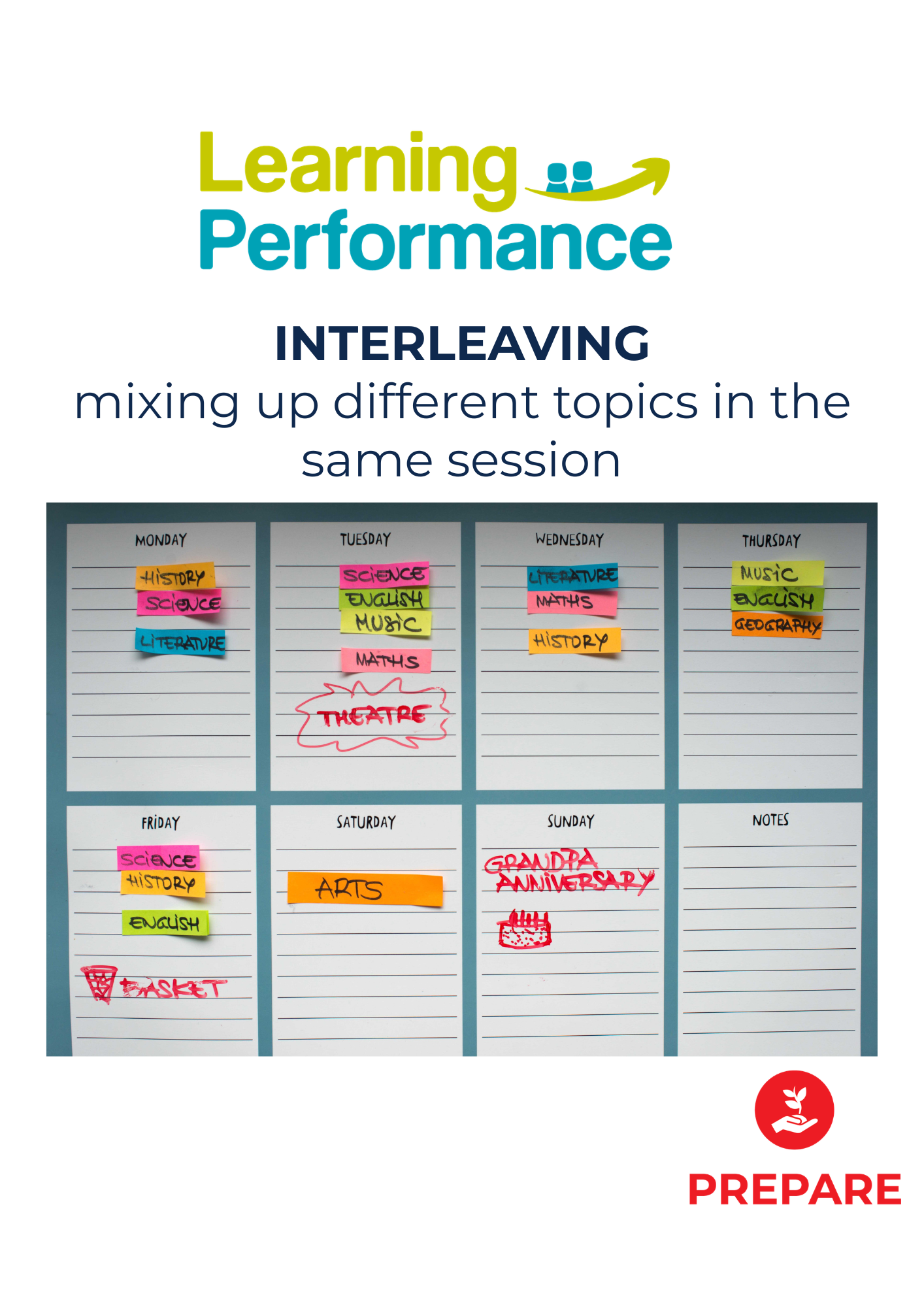
Instead of studying just one subject all day, interleave your topics.
- Example: On a Monday, spend 30 minutes on History, then 30 minutes on Science.
- Why it works: This forces your brain to "reset" and work harder to retrieve information, which strengthens your memory.
4. Retrieval Practice
Test yourself to see what you actually know without looking at your notes.
- Methods: Use quizzes, past papers, brain dumps, or "blurting" (writing everything you remember on a blank sheet).
- Self-Correction: After testing yourself, use your notes or a mark scheme to check what you got right and identify gaps

5. Advanced Flashcards (The Leitner System)
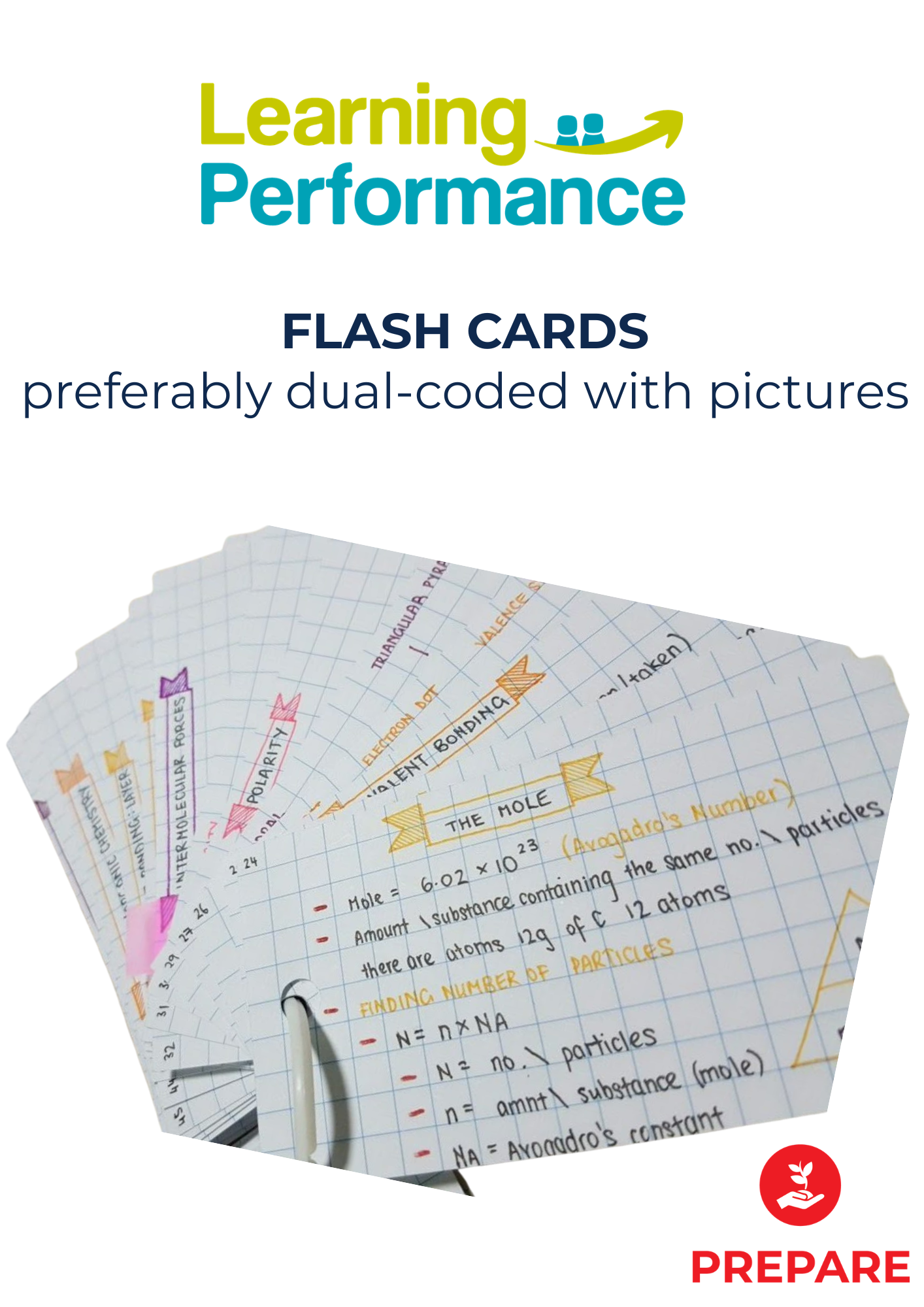
Flashcards are most effective when they include pictures (dual coding) and are organised using the Leitner System:
- Box 1: Practice every day.
- Box 2: Practice every other day.
- Box 3: Practice once a week.
- Box 4: Practice every other week.
- Box 5: Practice once a month.
- Movement: Correctly answered cards move up a box; incorrectly answered cards move back down

6. The Power of Dual Coding
Combine words and visuals to double your memory's power. Your brain processes images and text differently; using both creates two pathways to the same information.
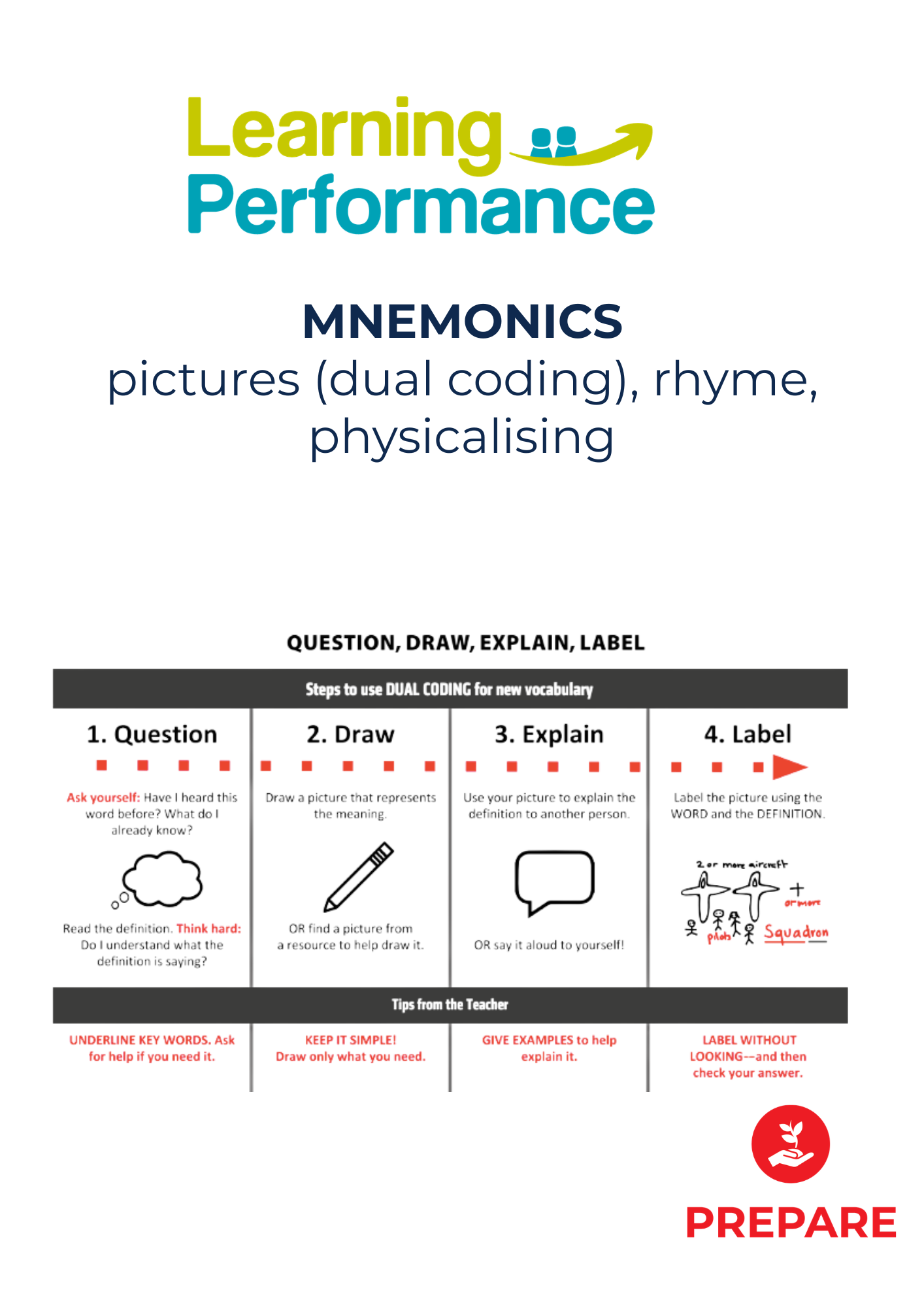
The 4-Step Vocabulary Builder:
-
Question: Read the definition. Do you really understand it?
-
Draw: Create a simple, clear picture representing the meaning.
-
Explain: Use your picture to explain the concept aloud.
-
Label: Label the image without looking at your notes to check your recall.
7. Active vs. Passive Strategies
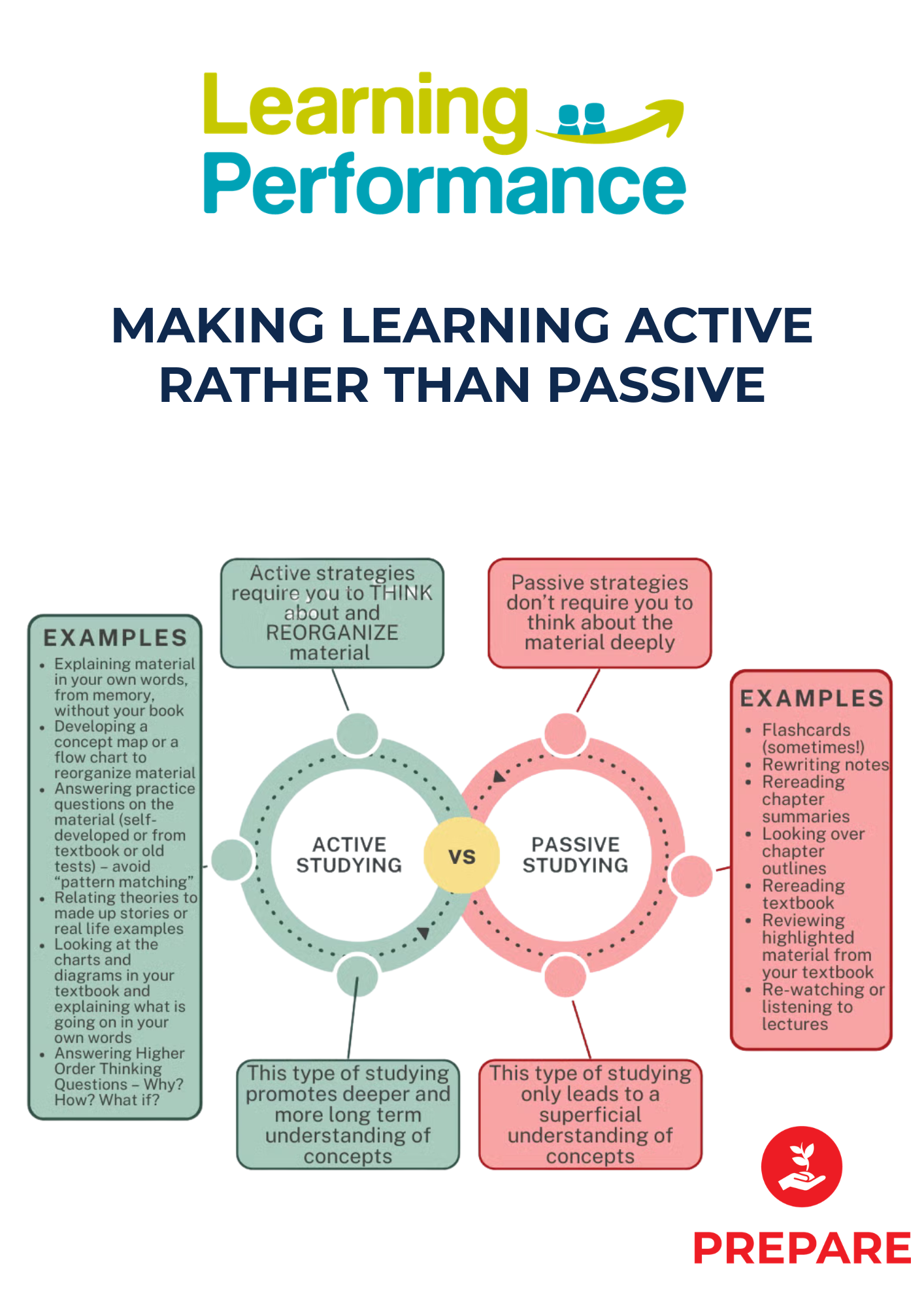
Ensure your study sessions are active by forcing your brain to reorganise materials.
- Active Examples: Explaining material in your own words, creating concept maps or flow charts, and answering "Higher Order" questions like "Why?", "How?", and "What if?".
- Avoid Passive Habits: Simply rereading textbooks, highlighting text, or re-watching lectures often leads to only a superficial understanding.
5. Using Analogies & Mnemonics
When a concept feels too complex, simplify it.
-
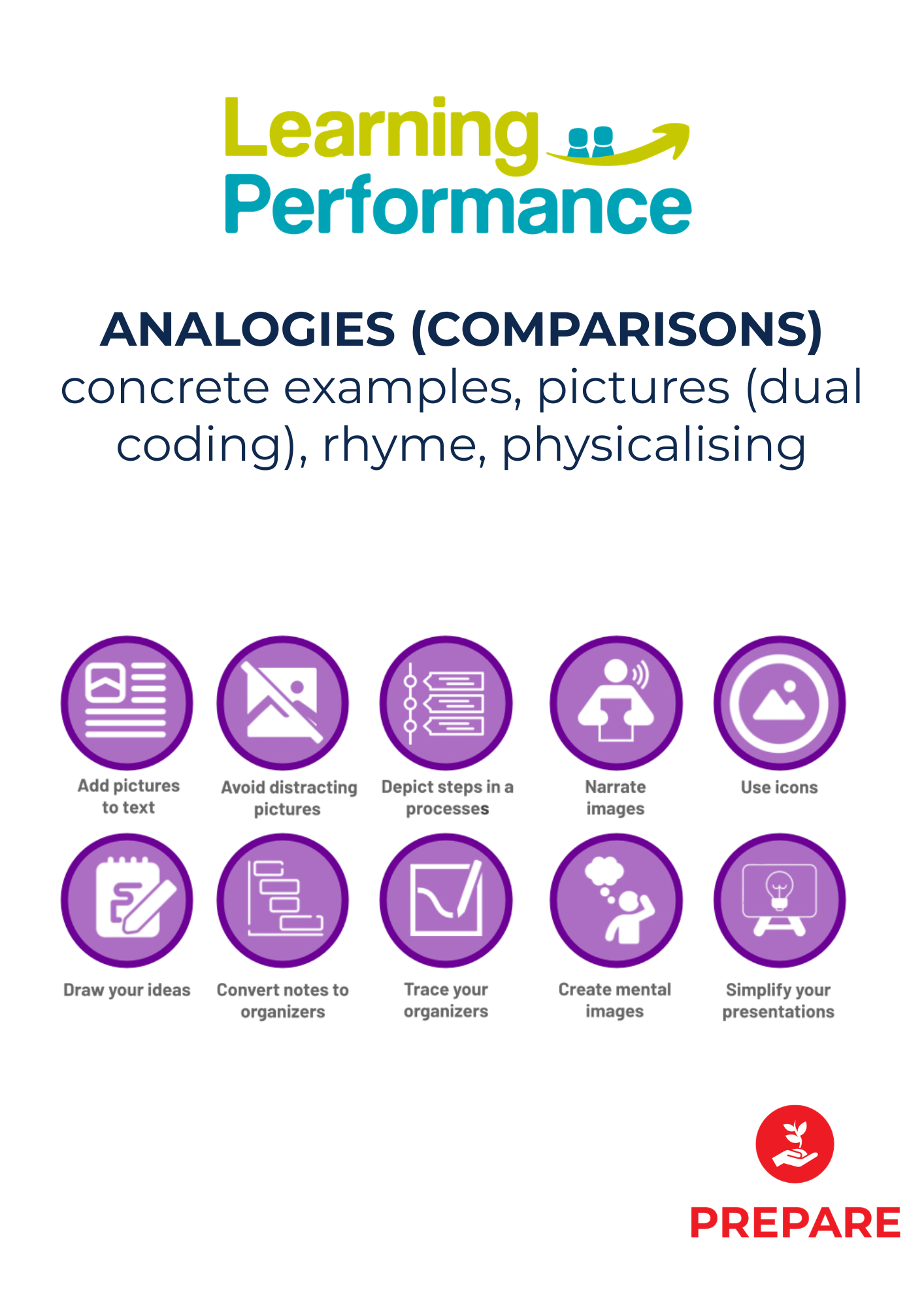
Analogies: Compare a scientific process to a real-life situation (e.g., comparing a cell to a factory).
-
Mnemonics: Use rhymes, patterns, or acronyms to remember lists. Combine these with Dual Coding (icons and sketches) to make them unmissable.