

Science KS3 | Years 7 to 8
Subject Content
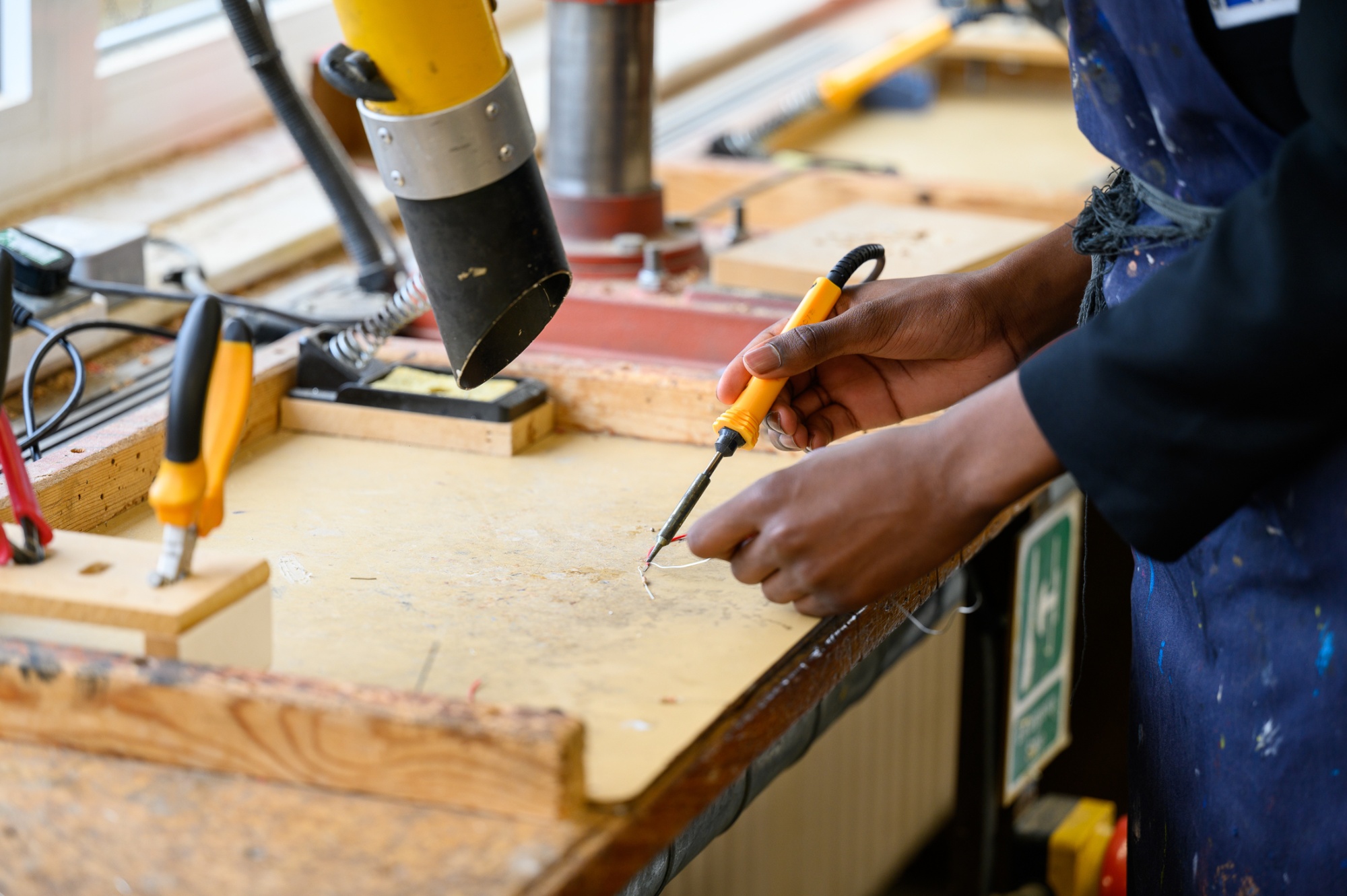
Excitement and engagement to promote awe and wonder is the focus of our KS3 science curriculum. We want students to develop their love of science which they bring from KS2 and home and become the best scientists that they can be. Our curriculum is based around practical investigations, in Biology, Chemistry and Physics, and ‘finding things out for yourself’.
This is achieved in Year 7 through the study of 10 different topics across all three of the science disciplines.
Term One
- Introduction to Science
- Matter | Particle model and separating mixtures
- Organisms | Movement and cells
Term Two
- Forces | Speed and gravity
- Earth | Earth's structure and the universe
- Energy | Energy costs and energy transfer
Term Three
- Matter | Elements and the Periodic table
- Electricity | Potential difference, resistance, and current
- Genes | Variation and human reproduction
- Ecosystem | Interdependence and plant reproduction
Year 8
In Year 8 through the study of 8 different topics across all three of the science disciplines.
Term One
- Waves | Sound and light
- Reactions | Acids and alkalis, and metals and non-metals
- Organisms | Breathing and digestion (continues into term 2)
Term Two
- Forces | Contact forces and Pressure
- Reactions | Types of reaction and chemical energy (continues into term 3)
Term Three
- Organisms | Respiration and photosynthesis
- Energy | Work and heating and cooling
- Earth | Climate and the Earth's resources
Assessment Details
The assessment plan for Year 7 consists of regular 'Knowledge check' assessments throughout the year which students will be given notice of via their Google Classroom.
There will be two formal assessments:
- Mid-year assessment
- End of year assessment
All of these assessment types work to inform current grades for students and to identify areas for development.
Additional Equipment Recommended
- Students will need a scientific calculator.
- We have recommended revision guides being available in the school shop.
- Coloured pencils are useful for diagrams.
What can I do to support my child at home?
- Take an interest in the science that students are studying
- Encourage students to practice spelling and learn definitions.
- Encourage students to complete the homework and meet deadlines
- Support your child to complete their weekly Sparx Science independent learning tasks.
- We recommend the use of Seneca learning. Encourage students to engage with this regularly and to use it for targeted revision in the preparation for exams.
- Take advantage of relevant science institutes to support interest in science. For example, Tring Museum, National Science Museum, Woburn Safari Park, College Lake, Whipsnade Zoo.
- Help students prepare thoroughly for assessments
Recommended Resources for the Course
Websites
Books
- KS3 Science Study Guide – Higher ISBN 9781841462301
- KS3 Science Study Guide – Foundation ISBN 9781841462400
Teaching Staff
Head of Science
Mrs Beatty - lbeatty@cottesloe.bucks.sch.uk Save
Second in Science
Mrs Moore - vmoore@cottesloe.bucks.sch.uk
Teachers of Science
Mr Brockwell - gbrockwell@cottesloe.bucks.sch.uk
Mrs Barnes - jbarnes@cottesloe.bucks.sch.uk
Miss Edwards - jedwards@cottesloe.bucks.sch.uk
Mr Mudarikiri - tmudarikiri@cottesloe.bucks.sch.uk
Mrs Woodburn - kwoodburn@cottesloe.bucks.sch.uk
Miss Gamage - cgamage@cottesloe.bucks.sch.uk
Mrs Hooley - chooley@cottesloe.bucks.sch.uk
Mrs Baldwin - lbaldwin@cottesloe.bucks.sch.uk
Mrs Smith - ksmith@cottesloe.bucks.sch.uk
Mr Magill - gmagill@cottesloe.bucks.sch.uk